
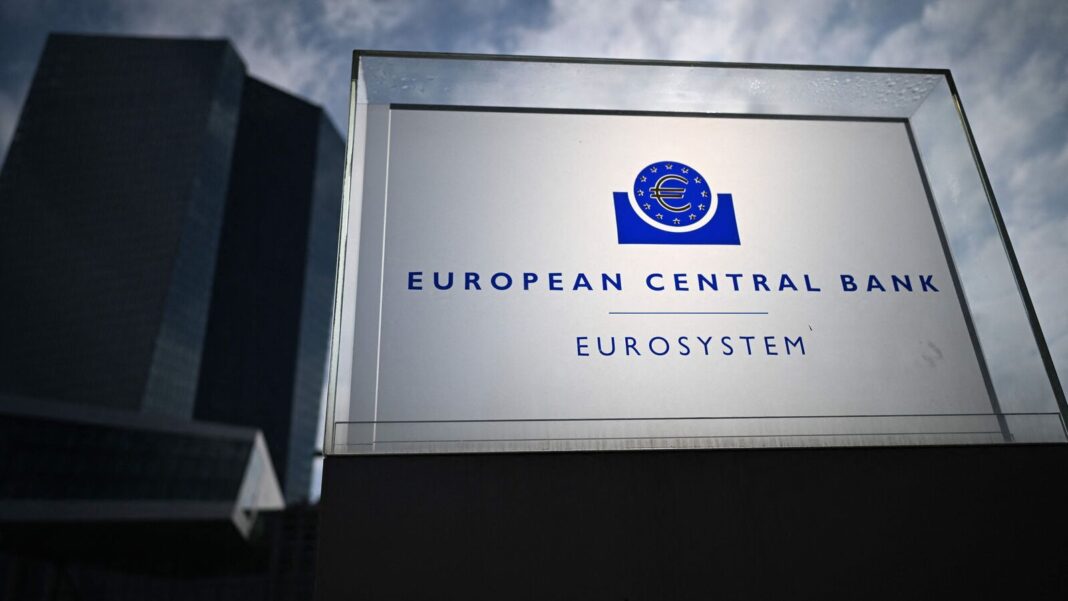

A definitive defense of the current monetary policy framework was articulated on Monday, February 9, 2026, as European Central Bank (ECB) policymaker Joachim Nagel suggested that the prevailing interest rate levels are accurately positioned to achieve long-term stability. This assessment follows a unanimous decision by the governing council in the preceding week to maintain the primary interest rate at 2.0%. While a segment of the policy-making body has expressed apprehension regarding a recent dip in price growth—which was observed to have receded to 1.7% in the previous month—the consensus among senior officials, including the Bundesbank President, is that such deviations are likely to be short-lived and do not necessitate an immediate corrective response.
It was contended by Nagel that the central bank should only consider an alteration of its course if medium-term inflation expectations were found to deviate from the established target in a manner that is both sustainable and noticeable. Current internal modeling suggests that this threshold has not been breached. The perspective was offered that several structural factors reinforce the appropriateness of the 2.0% rate. Primarily, the recent shortfall in inflation is categorized as a minor and temporary phenomenon rather than a systemic trend. Furthermore, it was noted that medium-term projections continue to align precisely with the institution’s primary mandate, suggesting that the broader trajectory of the euro zone economy remains on a predictable path toward the target.
The stability of long-term inflation expectations was highlighted as a critical pillar supporting the current “hold” stance. These expectations are described as being “firmly anchored,” a view that is corroborated by core inflation measures. By stripping out volatile components such as energy and food, core price data provides a more accurate reflection of underlying economic momentum. It was further observed that recent updates to the central bank’s projections, following the models established in December, continue to support the thesis that price growth will naturally settle at the desired 2% goal.
An analysis of data published in the first week of February revealed that the January decline in inflation was largely driven by a reduction in global energy costs. While a moderation in price increases was also documented within the services sector, these fluctuations are viewed as insufficient to trigger a policy shift. It was argued by Nagel that small, temporary deviations—particularly those resulting from volatile components like energy—do not require a change of course so long as inflation expectations remain established. This principle of neutrality is intended to be applied symmetrically, addressing scenarios where the inflation target might be undershot as well as those where price growth risks exceeding the mandate.
The current strategy reflects an institutional commitment to avoiding “knee-jerk” reactions to high-frequency data points. By maintaining a steady hand, the ECB seeks to provide a predictable environment for both consumers and businesses within the bloc. The underlying rationale is that premature rate cuts, prompted by a temporary dip in energy prices, could lead to unintended volatility or a resurgence of inflationary pressures later in the 2026 fiscal year. Consequently, the focus remains on the medium-term horizon, where the convergence of labor market dynamics and industrial output is expected to sustain a balanced price environment.
The divergence of opinion within the ECB regarding the risk of “undershooting” the target highlights the complexity of modern central banking. While Nagel and other hawks prioritize the anchoring of expectations, more dovish members of the council remain wary of a potential stagnation in growth that could follow a period of excessively tight credit. However, as of early February 2026, the dominant view remains that the current 2% rate provides the necessary “restrictive yet balanced” posture required to shepherd the euro zone through the final stages of post-pandemic normalization.
Ultimately, the 2026 narrative for the European Central Bank appears to be defined by a patient adherence to established targets. The rejection of an immediate reaction to the 1.7% inflation reading serves as a signal to global markets that the ECB is prioritizing structural stability over short-term cyclical management. As the fiscal quarter progresses, the institutional focus will remain on whether service-sector inflation continues its moderate descent or if geopolitical factors reintroduce volatility into the energy markets, potentially testing the resolve of the governing council’s current unanimous position.