
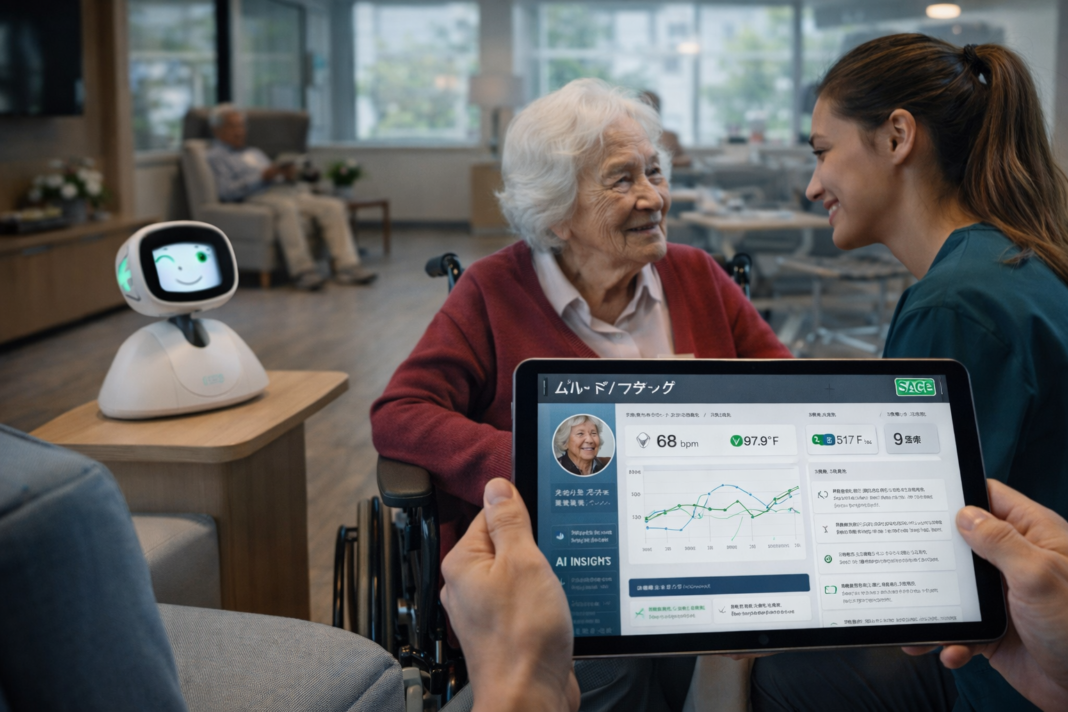

A significant infusion of capital into the senior care technology sector was documented on Wednesday, March 4, 2026, as it was announced by the New York-based firm Sage that $65 million in new funding has been secured. This Series C financing round was reported to have been led by Goldman Sachs Alternatives, with continued participation from existing institutional investors IVP and Goldcrest. It is understood that the primary objective of this capital raise, which brings the total funds accrued by the organization to $124 million, is the expansion of an artificial intelligence platform specifically engineered to augment the capabilities of caregivers within nursing homes and assisted living facilities.
The necessity for such a technological intervention is framed by the current operational inefficiencies prevalent in the senior care industry. It has been maintained by Chief Executive Officer Raj Mehra that the traditional tools available to care staff are fundamentally disconnected from the actual mechanics of modern care delivery. In many contemporary facilities, personnel are frequently required to manage complex shifts utilizing antiquated communication methods, such as pagers, physical paper logs, and walkie-talkies. This reliance on manual documentation and non-integrated communication systems is believed to contribute to delayed response times and a reactive rather than proactive approach to resident safety.
The core of the Sage technological offering involves the installation of advanced room sensors and proprietary AI software. These systems are designed to scan resident environments for signs of distress every few seconds, with the capability to alert the appropriate care staff in real time. It has been documented that the implementation of this technology has successfully reduced emergency response times to approximately three minutes, a stark contrast to the response periods of up to 45 minutes observed in facilities operating without such digital oversight. By automating the detection of falls or medical emergencies, the burden of constant physical surveillance is partially mitigated, allowing staff to allocate their time more efficiently toward direct resident engagement.
Looking toward the next phase of development, it is planned that the newly acquired funding will be utilized to build predictive AI capabilities. These upcoming models are intended to monitor nuanced daily patterns, including variations in sleep cycles, frequency of bathroom utilization, and specific nighttime movement trajectories. By analyzing these behavioral data points, the platform aims to identify residents who are at a high risk of falling or experiencing a sudden decline in health before an adverse event occurs. This shift toward predictive analytics represents a move toward “preventative geriatrics,” where data-driven insights are leveraged to intervene early in the trajectory of physical or cognitive deterioration.
The sensitive nature of monitoring elderly residents has necessitated a rigorous approach to data privacy and ethics. It was articulated by the company leadership that the system is configured to ensure that only specific triggered events are subjected to review by authorized personnel with the requisite permissions. Furthermore, a policy has been established where all collected data is deleted within a 30-day window, ensuring that the platform does not become a permanent repository of private movements. This balance between constant safety monitoring and the preservation of individual dignity is viewed as a critical requirement for the widespread adoption of AI in residential care settings.
The broader economic and demographic context of this investment is underscored by a deepening care shortage within the United States. It was cited by the firm, referencing data from S&P Global, that by the year 2030, approximately 72 million Americans will have reached retirement age. This demographic shift is occurring at a time when the labor market for professional caregivers is facing unprecedented strain. The deployment of AI is therefore seen not merely as a luxury but as a mechanical necessity to maintain safety standards in an era of human resource scarcity.
From a business model perspective, the organization has adopted a strategy designed to lower the barrier to institutional entry. It was disclosed that the company assumes the upfront costs associated with hardware installation, while generating revenue through a recurring monthly software subscription fee. This “Software-as-a-Service” (SaaS) approach allows care facilities to modernize their infrastructure without the immediate burden of significant capital expenditure. As the Series C capital is deployed through 2026, the focus of the geriatric health community will likely remain on whether these predictive models can successfully reduce hospitalization rates and improve the overall quality of life for the burgeoning elderly population.